|
Internet access is available but often not at a speed that allows posting on this blog with any efficiency. We promise to catch up on all days of our journey but please be patient.
0 Comments
We walked from our hotel to the Sakya Monastery. His Holiness Sakya Trichin resides in Dehra Dun but we would not see him until Bodhgaya where he was visiting with his family. Instead, at the request of Jigme Rinpoche, we were gifted with an empowerment from Chewang Tulku Rinpoche. The precious ritual of the long life empowerment left a lasting impression on all the pilgrims. Just to be in the presence of a master who spent 27 years in retreat studying Vajrayonini takes the expression "beyond words" to yet another level. He left retreat only at the request of his teacher, His Holiness Sakya Trichin, and he now rarely leaves his quarters at the monastery. To have him come into the shrine room for us was an extraordinary blessing. It is a testament to his kindness and generosity and to the respect that he paid to Jigme Rinpoche. Even as he walked into the shrine room, we could feel the radiance of his being. Most people said they had never been in such a joyous presence. Jigme Rinpoche reminded us that in seeing and hearing such a being, a seed was planted in us so that we could be inspired to emulate his life of practice.  Sakya Center — Dehra Dun  Chewang Tulku Rinpoche  On an upper level of the temple, in a room with masks and painted images of wrathful protective deities Rinpoche spoke of their role and symbolic meaning in the context of Vajrayana.
 The pilgrims were granted a meeting with Her Eminence Jetsun Khandro Rinpoche. This was on the date of the Tibetan New Year called Lama Losar, when students traditionally go to pay respects to their teachers. She was very kind and generous to delay a scheduled puja in order that we might hear her words of wisdom. Jigme Rinpoche and Her Eminence exchanged khatas. She contrasted the Dharma in the East and the West and spoke of how learning is important but it requires practice and heart. Empathy is not compassion. Devotion is hard to explain as one needs to come from something that can’t be put into words. Her Eminence also drew a distinction between kindness, which is very easy to connect to, and bodhicitta which is “an entirely different stratum.” On Jigme Rinpoche’s request, Her Eminence spoke on pilgrimage. She said it was “one skillful method which leads you to meeting those challenges of a rather linear perspective and brings you to embrace something that is much more profound, subtle, and can’t be put into words”. She spoke about how it could come in the form of a stomach ache or in meeting all the challenges of travel or to "really feeling a depth and profundity of just connecting to what buddhadharma is in a very subtle inexpressible level" such as when one sits under the very Bodhi tree where the Buddha actually sat or one circumambulates a stupa or when one sees a monk or nun meditating, these produce experiences that books and lectures cannot provide. When you are brought to tears, you feel that you open a very important gate to really understanding what it means to be a practitioner. Until then we are merely students. 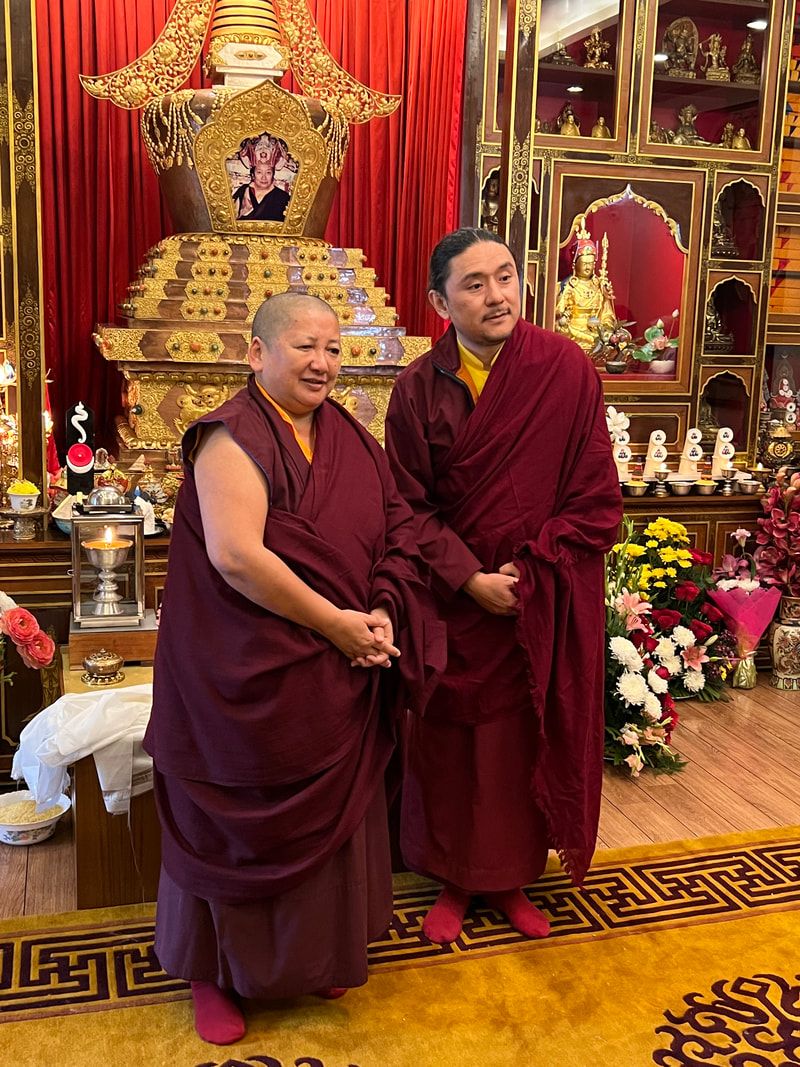 Jigme Thrinley Rinpoche and Her Eminence Jetsun Khandro Rinpoche 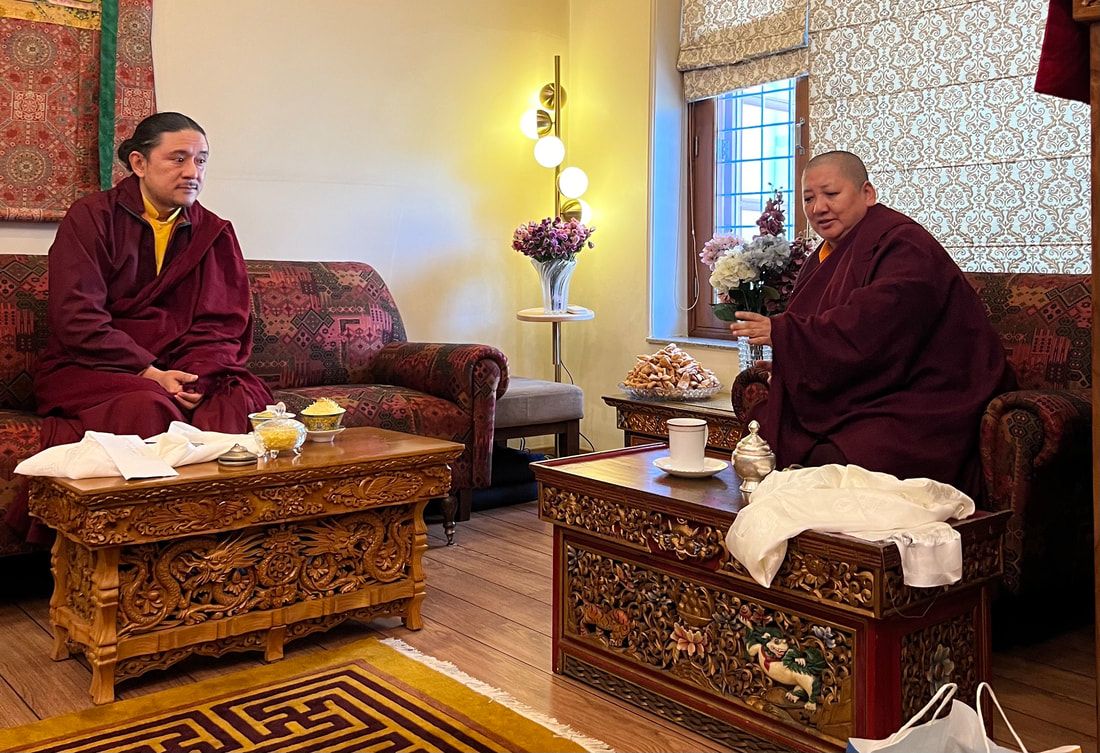 Jigme Thrinley Rinpoche and Her Eminence Jetsun Khandro Rinpoche 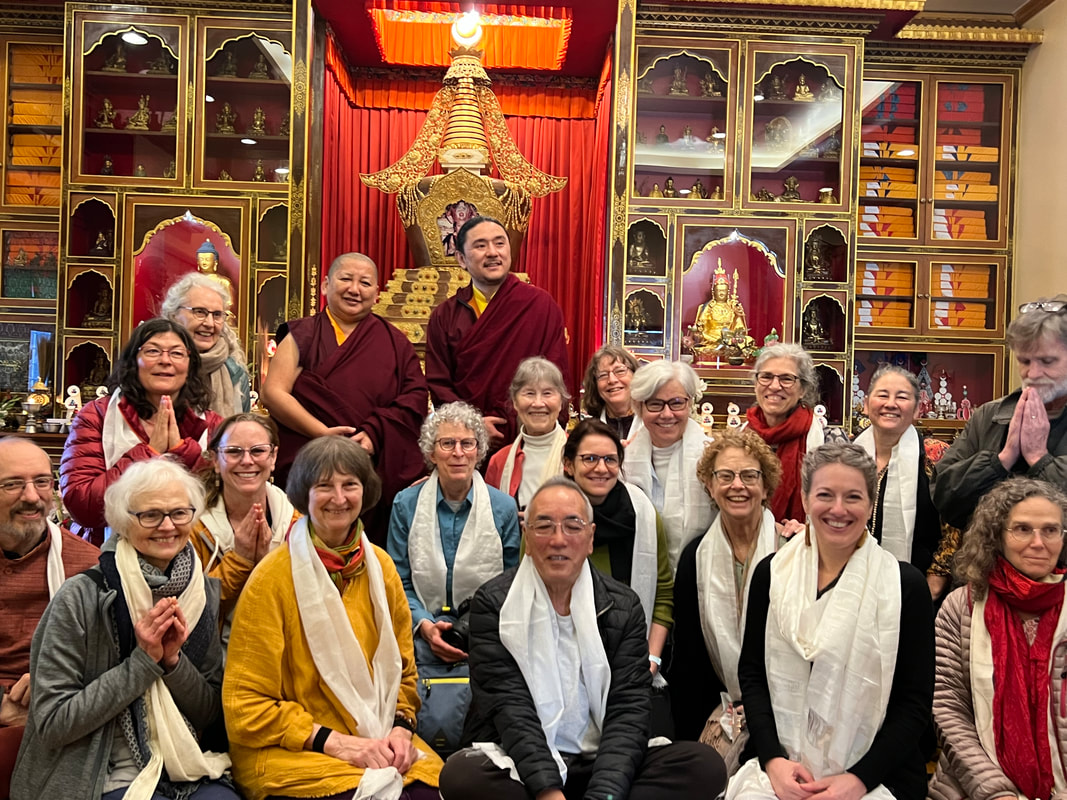 Happy pilgrims pose with Her Eminence Khandro Rinpoche and Jigme Thrinley Rinpoche We walked the grounds of the monastery complex with 300 resident monks. They included a World Peace Stupa and an inspiring statue of Guru Rinpoche. We went inside the stupa and heard teachings from Jigme Rinpoche. Each teaching immersed us yet more fully into the Sacred Journey. 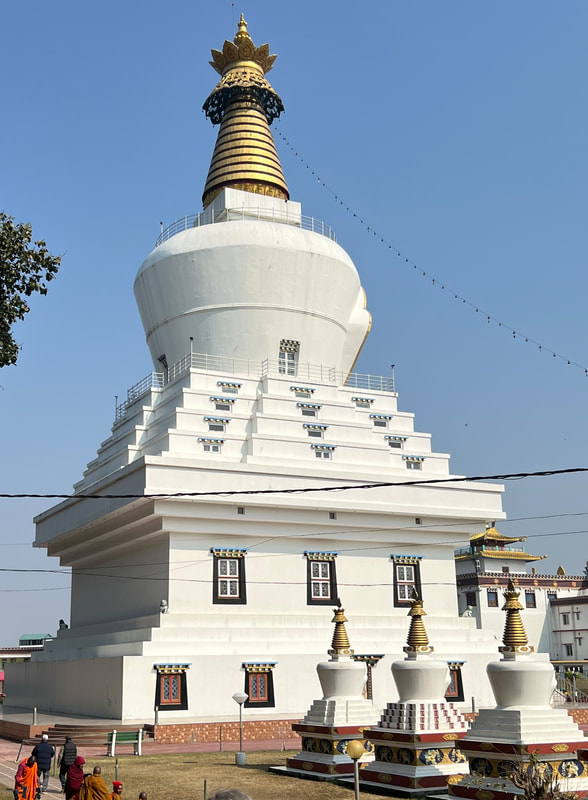 The World Peace Stupa 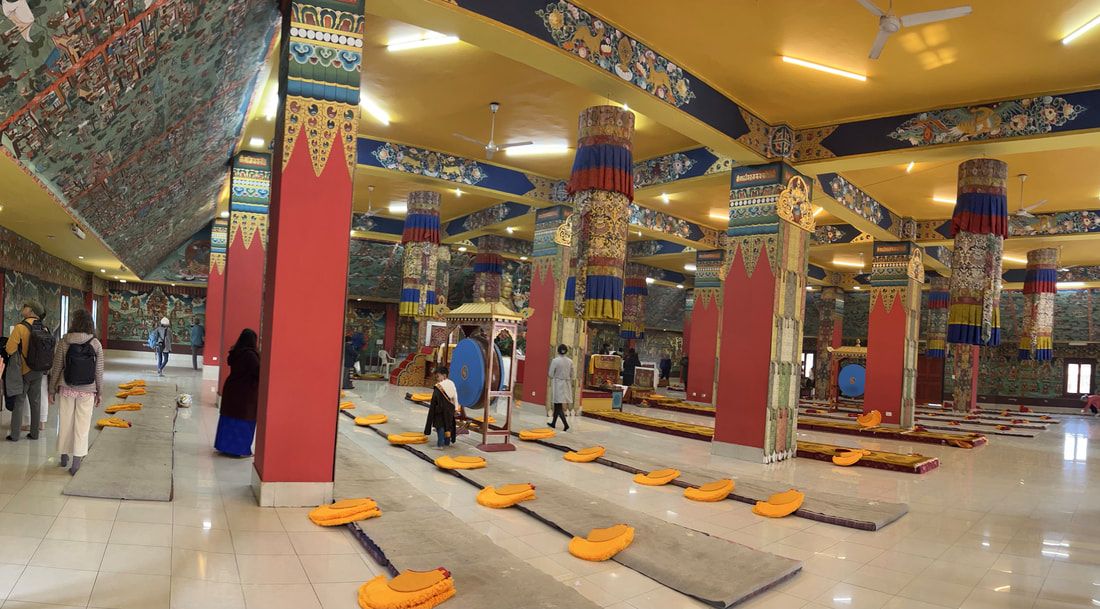 Inside the World Peace Stupa at Mindrolling Monastery 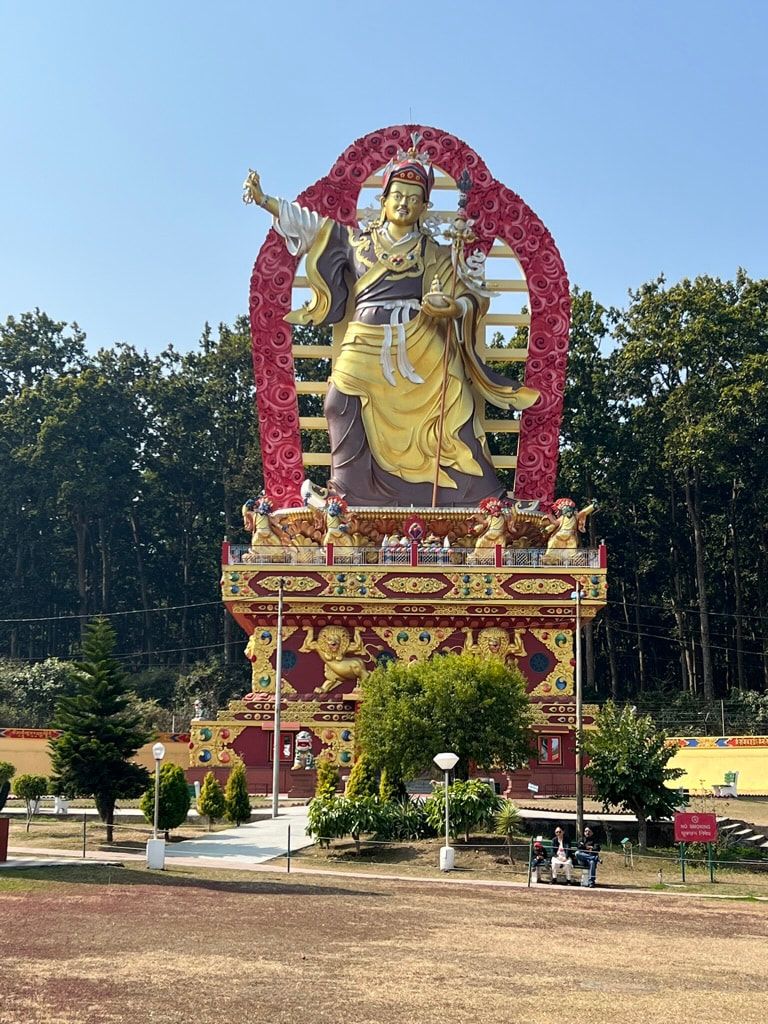 Guru Rinpoche on the grounds of MIndrolling Monastery
The pilgrims boarded an early morning first class train for just over 5 hour ride to Dehradun near Himalayan foothills. 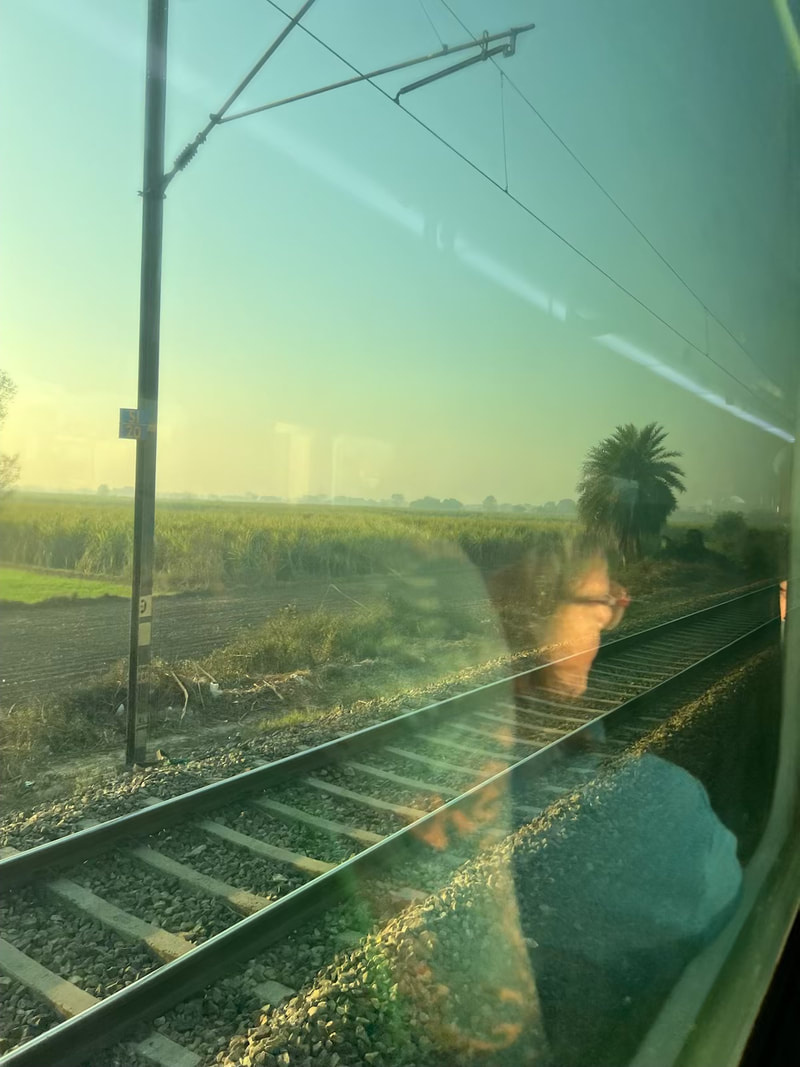 To end the day the pilgrims made a stop at Delhi’s famous stepwell. This ancient structure from the 14th century was used, not only to store water, but as a community gathering place. Now, hundreds of years later it still serves as a cool quiet refuge from the hustle and bustle of the streets of Delhi. 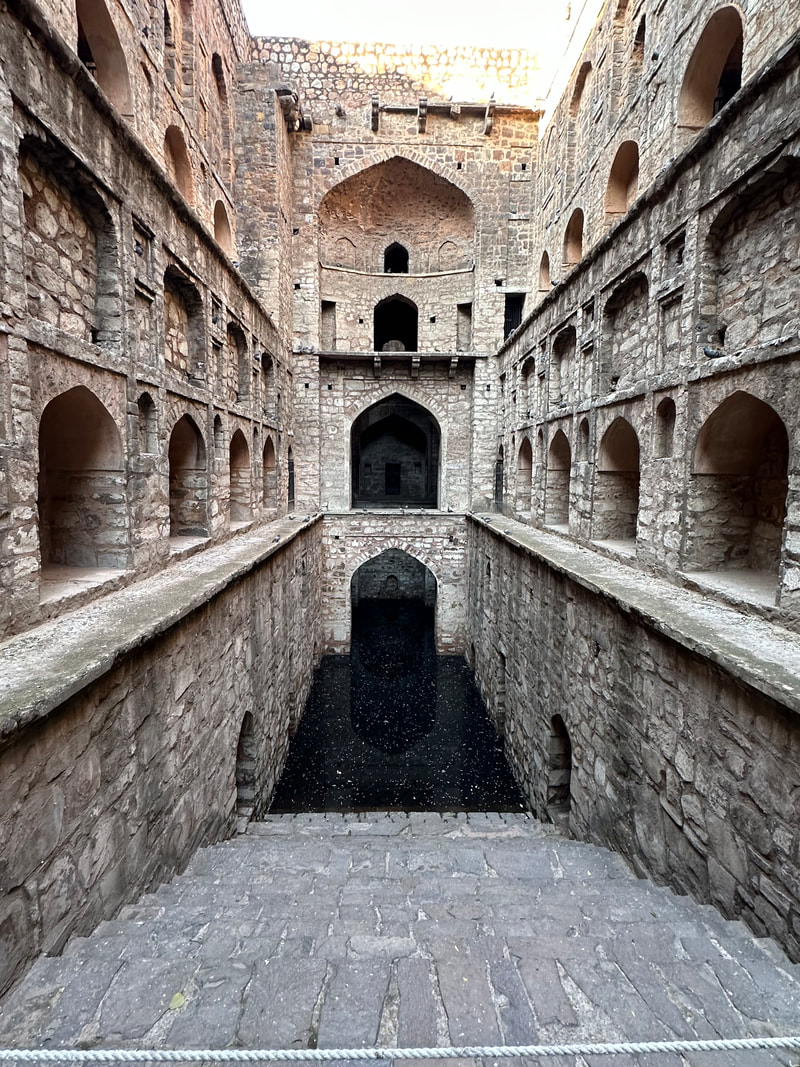 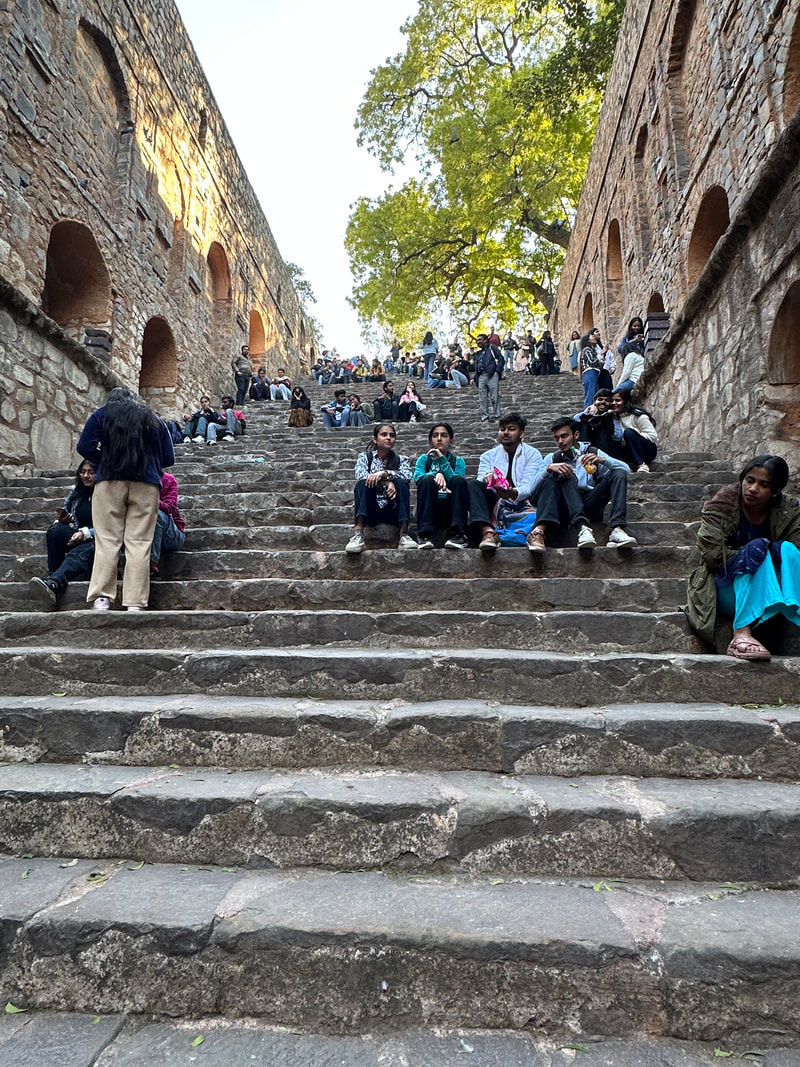 Day Two Seeing the artworks of ancient India, including many representations of Buddhist figures, while impressive, was nothing compared to the highlight of the museum, a relic of the Buddha’s tooth. Rinpoche gave a meditation and teaching on purification of negativities. We recited Praise to the Twelve Deeds of the Buddha, chanted and walked kora around the shrine. It was particularly touching to be in a supposedly secular setting yet it seemed almost expected that there be teachings and chanting in a museum. 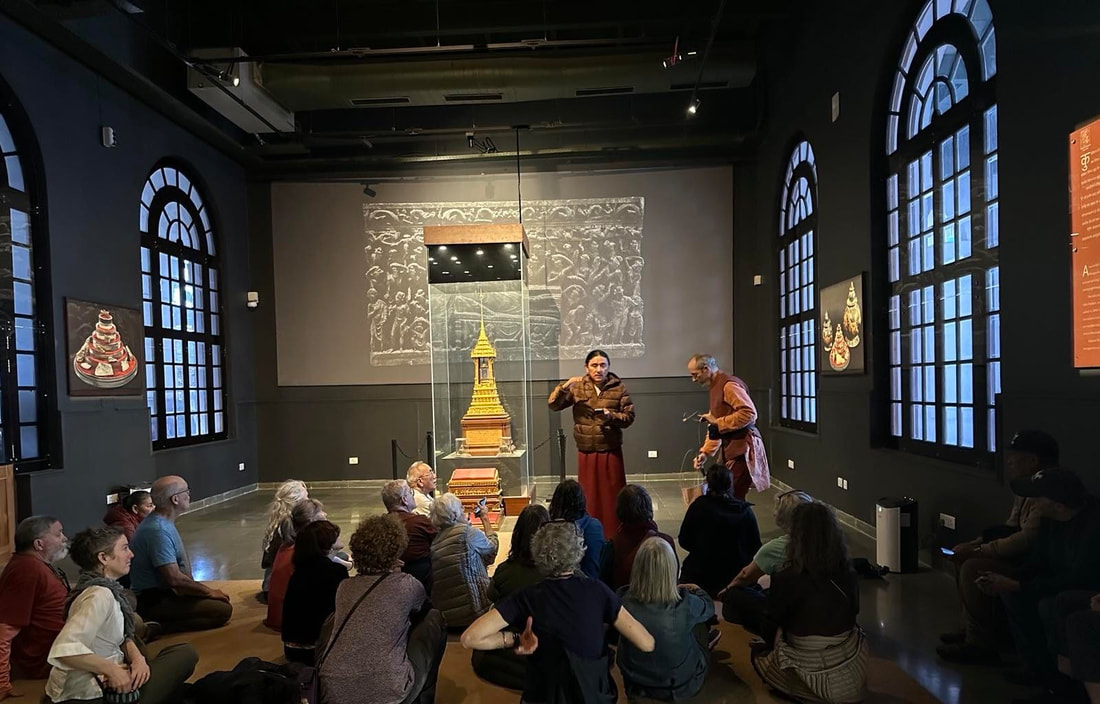 Pilgrims hearing teachings before the shrine with the Buddha’s tooth
Rinpoche took some time to elaborate on the meaning of Ghandi in relation to the Sacred Journey. Even though Ghandi was secular, his moral code was a model for anyone on the path to enlightenment. "What we can take from Ghandi is his sheer dedication and commitment to doing something...not giving up...that's what being on the path means. Mahatma Ghandi knew where his destination was—peace and not violence. Speed, aggression and violence are very quick and expedient in solving problems but fundamentally are not long lasting or stable. Peace, the path of nonviolence, though arduous and tiring and difficult...(is the only path that is) fundamentally strong, stable and long lasting. Ghandi is a world wide known figure yet he was not particularly notable until one day his first class passage on a South African train was questioned due to the color of his skin. Rinpoche explained that such a pivotal moment often occurred in the lives of great public figures. Ghandi worked tirelessly for Indian freedom and equality for all. The memorial honors him with an eternal flame on a base of black marble which marks the spot of his cremation after his assasination in 1948. The expansive gardens included blooming dahlias of all colors and trees planted by prominent world leaders including Nelson Mandela. The pilgrims walked Kora around the flame and contemplated Gandhi’s last words “Hey Ram”. 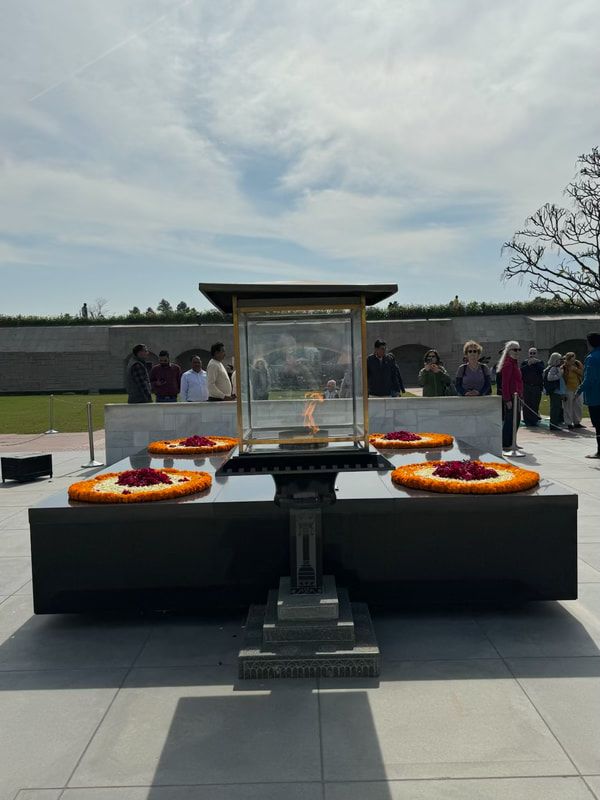 The eternal flame marking where Ghandi was cremated. 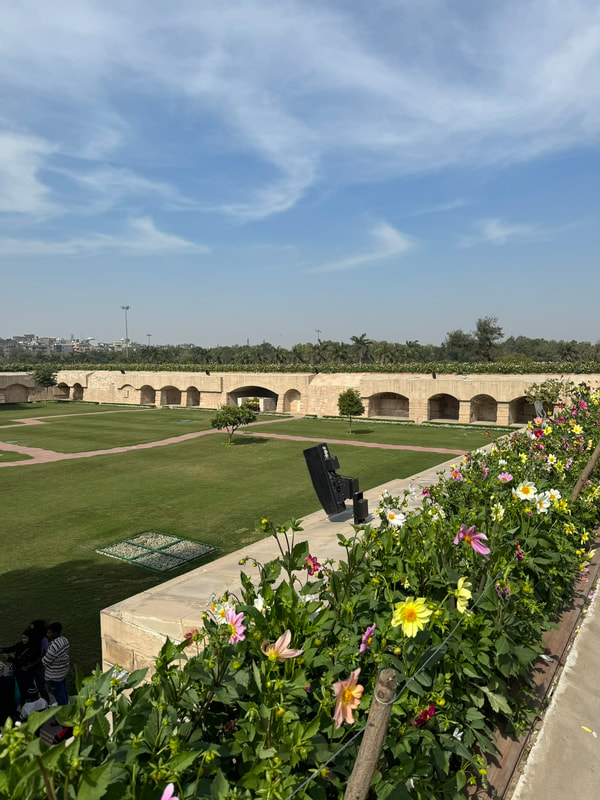 The grounds of the Gandhi Memorial
Arrival in India was in Delhi on February 7 early in the morning and wasted no time in immersing the group in the Journey. Within hours we were treated to a special opportunity to meet with Geshe Dorji Domdul, the director of Tibet House in New Delhi and a former translator for His Holiness Dalai Lama. Rinpoche had requested that he speak on the meaning of pilgrimage and the importance of merit. We were introduced to something that would become a theme of the Sacred Journey — humility. Geshe-la explained how he became the translator to His Holiness as if by accident, giving himself no credit for all of his learning and expertise. The teaching helped us all to see the importance of the Journey we were beginning and how it will affect our lives. Afterwards Rinpoche elaborated on the teachings. We forgot all about jet lag and were ready for our Journey.  Geshe Dorji Damdul with Jigme Thrinley Rinpoche  The pilgrims with Geshe Dorji Domdul and Jigme Thrinley Rinpoche  Jigme Thrinley Rinpoche teaching on the words of Geshe Dorji Damdul
29 pilgrims, from various parts of the US and Europe, embarked on the Sacred Journey to India and Nepal with Jigme Thrinley Rinpoche. Each year Rinpoche offers the opportunity to travel in the footsteps of the Buddha. This year’s Journey will include Dehradun and Dharamshala. The Sacred Journey started off with an auspicious sign — the viewing of the Northern Lights from the plane!  Northern Lights over Greenland
|
NewsArchives
February 2024
Categories |
 RSS Feed